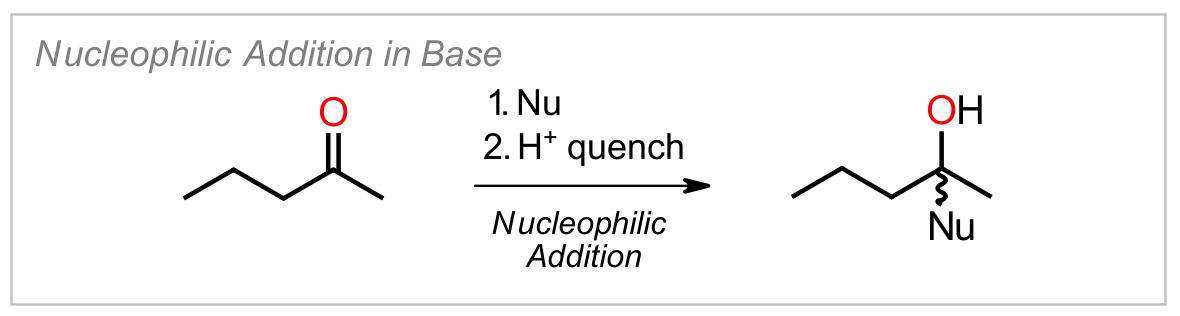
Nucleophilic Addition (Base)
A nucleophile adds directly to the carbonyl.
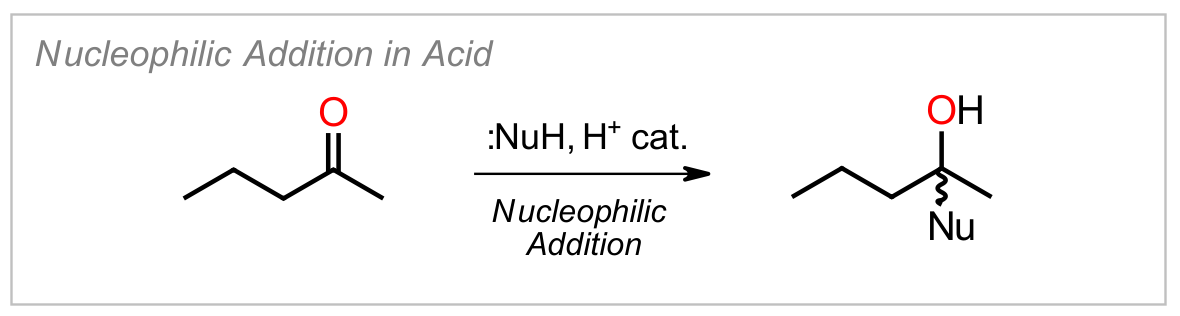
Nucleophilic Addition (Acid)
A protonated carbonyl is attacked by a nucleophile.
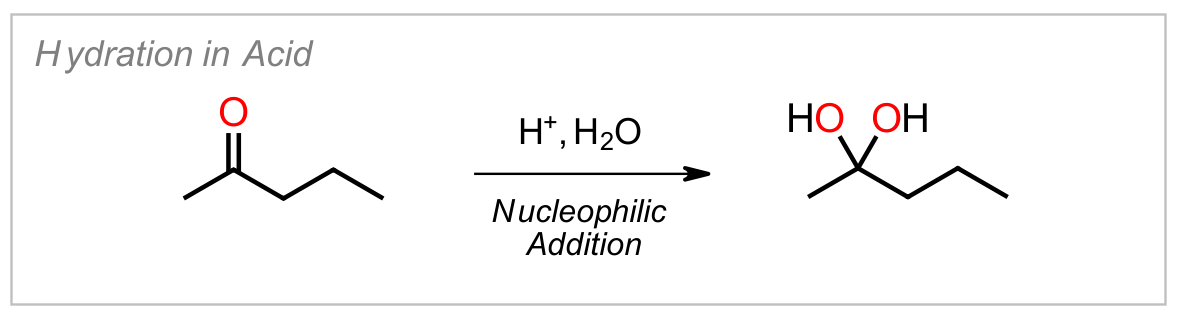
Hydrate Formation (Base)
Water adds under base to form a gem-diol.
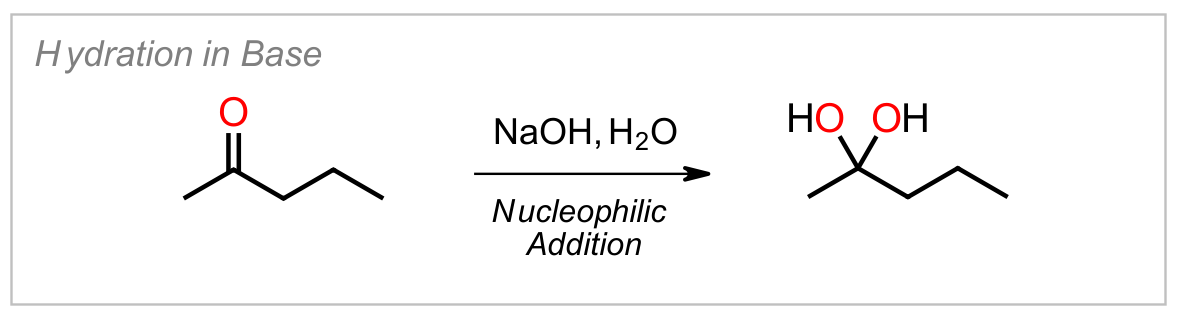
Hydrate Formation (Acid)
Water adds under acid to form a gem-diol.
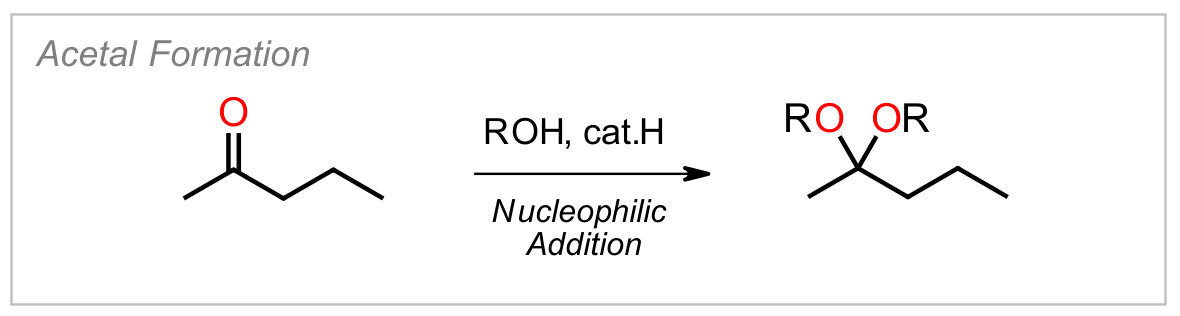
Acetal Formation
An aldehyde plus two alcohols gives an acetal.
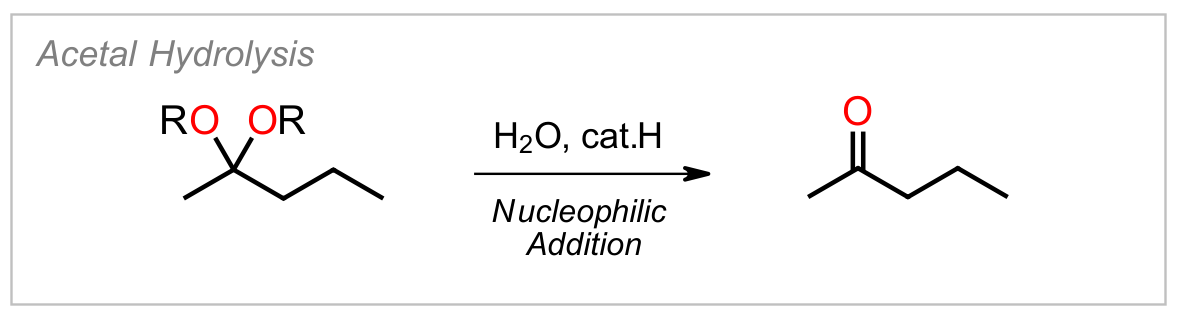
Acetal Hydrolysis
Aqueous acid reverts an acetal to the carbonyl.
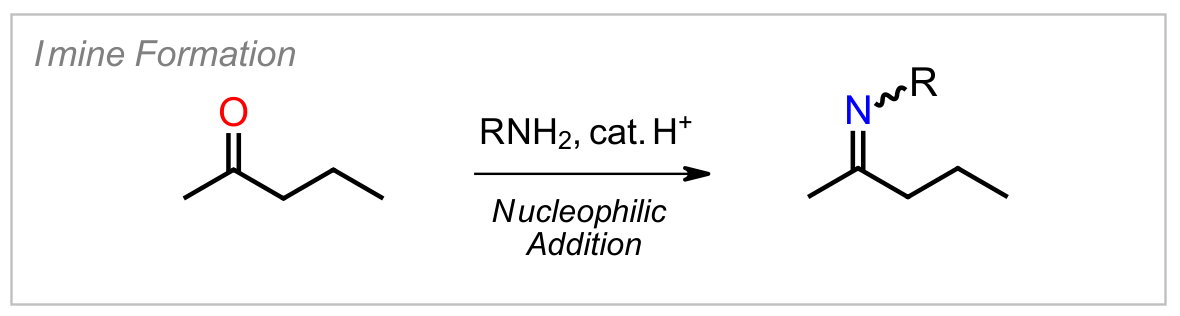
Imine Formation
A primary amine condenses to an imine.
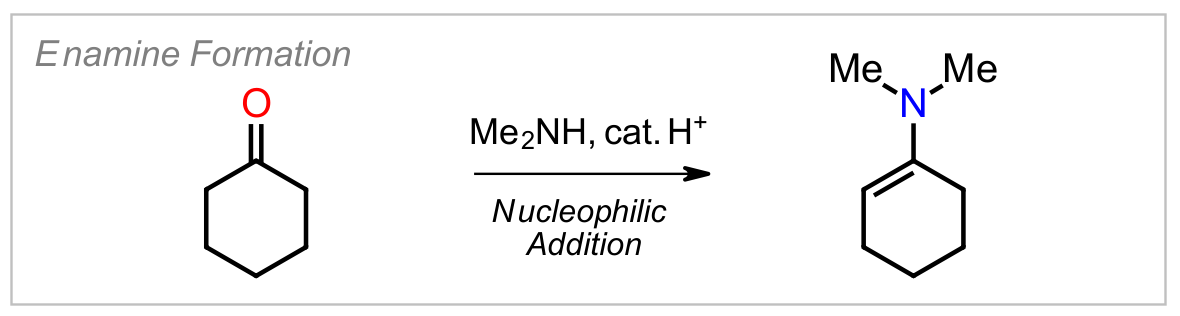
Enamine Formation
A secondary amine condenses to an enamine.
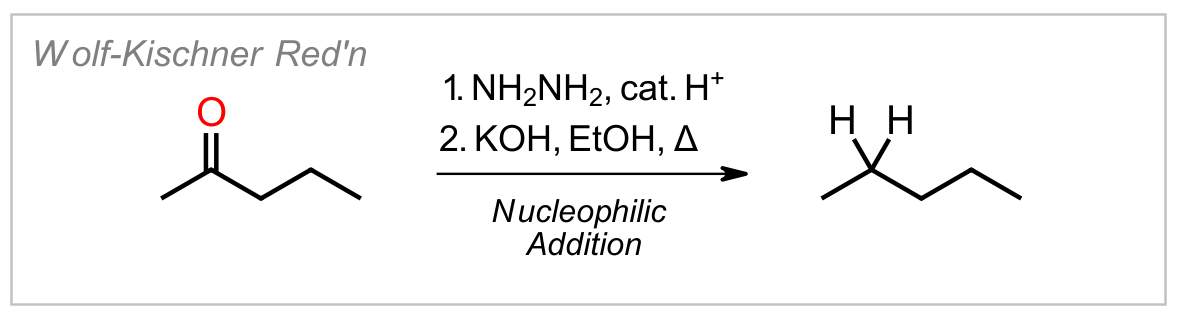
Wolff–Kishner Reduction
A hydrazone reduces the carbonyl to CH2.
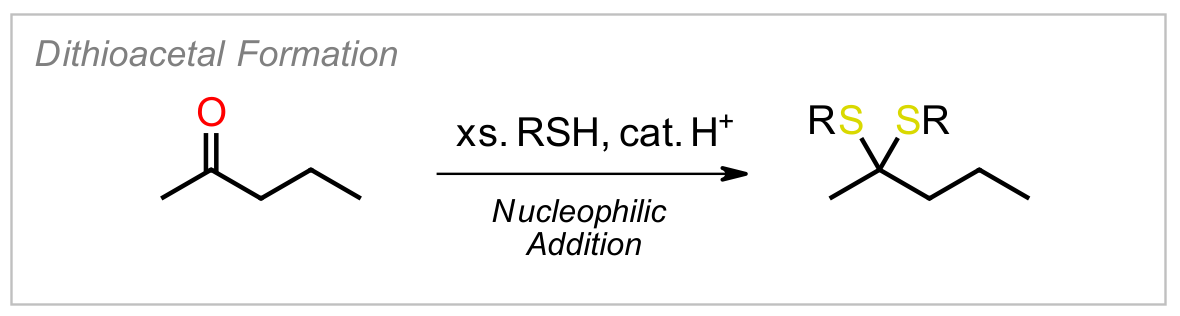
Dithioacetal Formation
Two thiols convert the carbonyl to a dithiane.
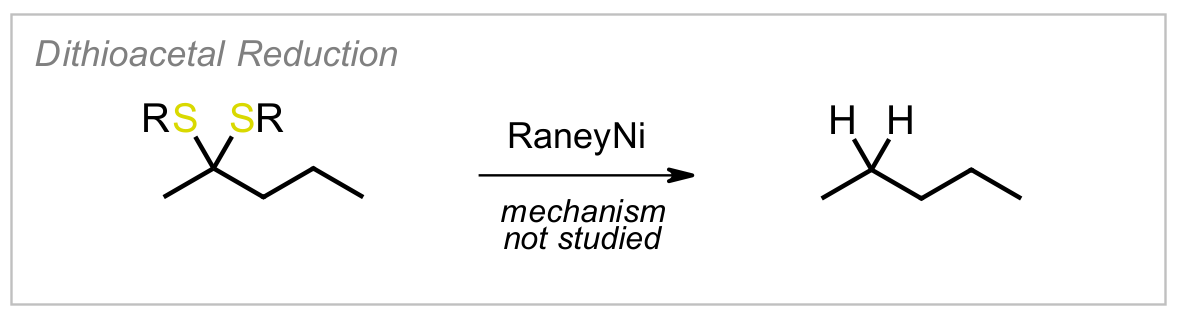
Dithioacetal Reduction
Raney nickel desulfurizes the dithiane to CH2.
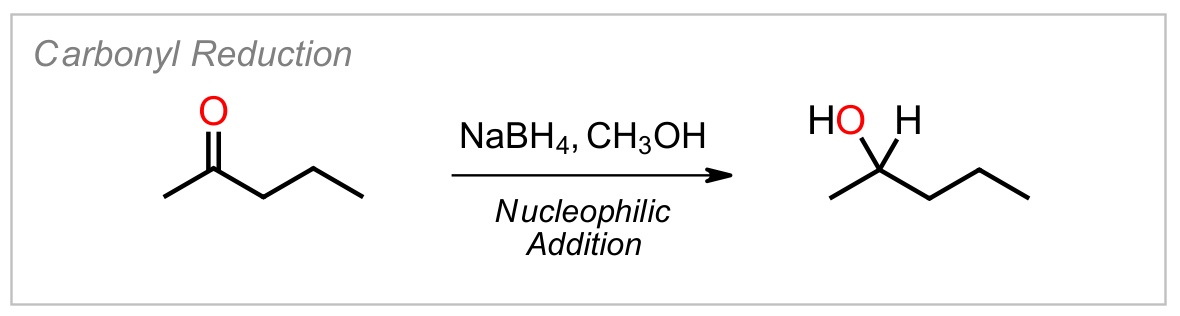
Hydride Additions
NaBH4 or LAH reduce the carbonyl to an alcohol.
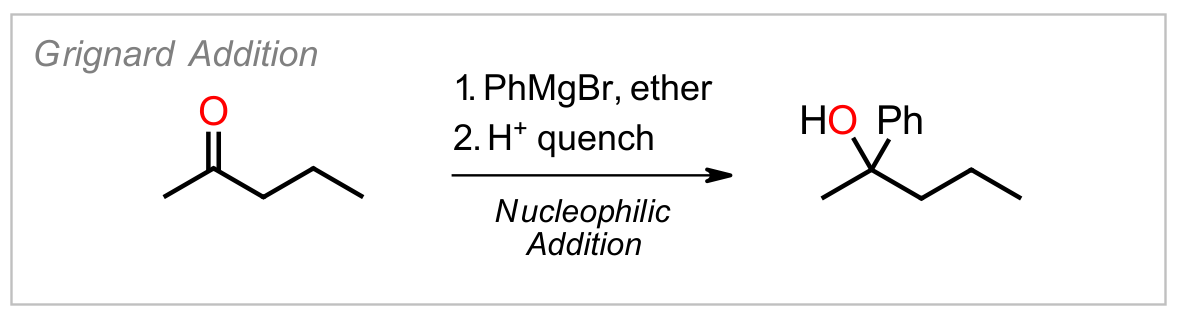
Grignard + Ketone
A Grignard reagent gives a tertiary alcohol.
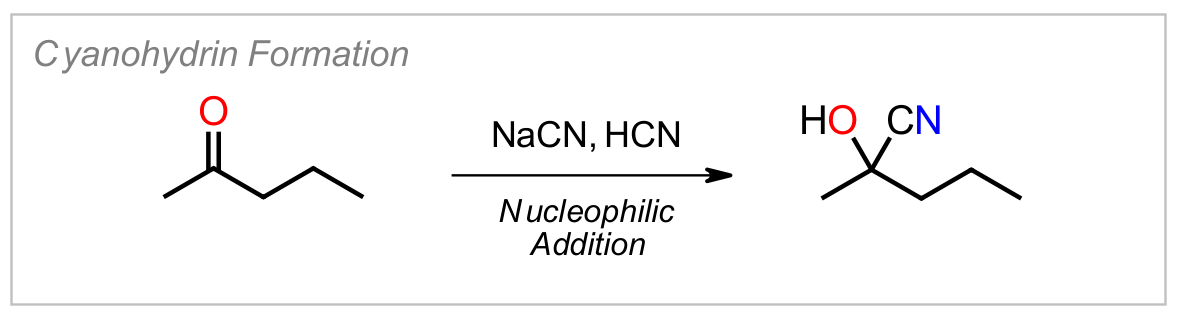
Cyanohydrin Formation
HCN adds to give a cyanohydrin.
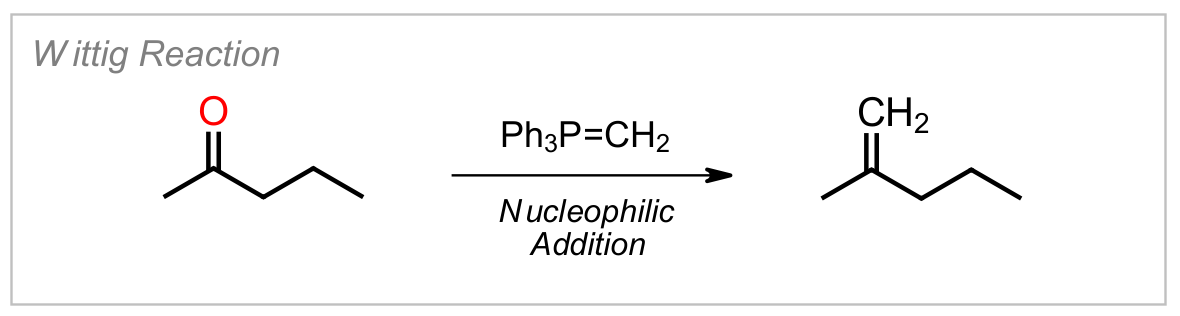
Wittig Olefination
An ylide converts the carbonyl into an alkene.
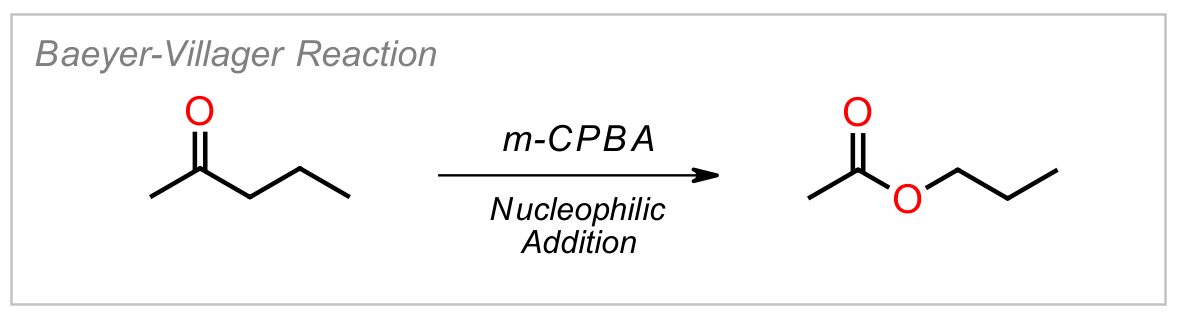
Baeyer–Villiger Oxidation
A peroxyacid inserts oxygen to form an ester.